Consider a poetry close reading circle to develop skills in reading, analysis, vocabulary, writing, listening, speaking, and critical thinking. This is how I do it in my classroom daily, pretty much all year. (See my blog post on how poetry is the avocado of the ELA classroom.)

You: But, Erin, I can’t teach fiction all year long. There are so many other standards!
Me: But teacher-reader, must poetry live in such a small box? Once you get going, poetry circle can also have music lyrics, nonfiction passages, novel excerpts, articles, primary sources, etc. (Rename it “close reading circle” if that helps.)
Langston Hughes? Maya Angelou? Walt Whitman? Lin-Manuel Miranda? How does knowing about the author and the time period in which they lived helped you understand their work with more depth? Think of it like generating a behind-the-scenes of the work. See? Nonfiction AND research, while still using poetry. Analysis can be argument or informative writing. The discussion circle is for speaking and listening. And it’s all critical thinking. Sneak in all those standards like vegetables! Take poetry out of that box and make it a casserole.

Logistics:
Supplies: Shop the sales over the summer for supplies. I have to wait until July in order to get reimbursed. Look for July/August sales on school supplies. I’ve gotten folders as low as 15 cents per folder at Target. I like having them all one color for daily poetry circle. (If you are in the aisle before me, I would never elbow you for them, but I might day dream about elbowing you for them.)

- 1 red folder per student, no brads needed.
- Writing Circle Analysis 1 per student to put inside
- Annotation Codes (free) 1 per student
- a packet of poems, here’s a cover page I start with and I copy and paste poems in one doc to be printed on paper and stapled. I use a separate color paper than white when possible to make it easier to find and see that students have the correct packet in front of them. I get many poems and ideas from Nancie Atwell, see below.
I start with Nancie Atwell’s Naming the World. Seriously. Buy it. Here’s a video clip of Nancie in action. She is the Mary Poppins of poetry teachers: perfect in every way.
To prep ahead of time: The first time I did this, I taught in a small portable. If it can be done in that small a space, I’m convinced it can be done anywhere. (I even ran 20-student poetry circle in the hotel lobby during the DC trip to be consistent before visiting the Holocaust Memorial Museum.) Plan ahead to have the doorway clear, and a pathway to your teaching desk in case you need to grab something. Other than that, my whole room is sacrificed for a speedy circle. Try to keep most groups of four desks together so they don’t have to reorganize too much when they move them back.
I print a variety of poems I might use in the next couple weeks in one packet so I don’t have to pass anything else out for a while. I printed it on pink paper for the first week, then golden rod, then yellow, green, blue, and purple, you get the idea. (Stands awkwardly and waves to teacher friends: “Hi. I’m Erin, and I’m a color-coder.”) I found color coding the packets helped me visually when I was grading so I remembered which packets were older than others, so I knew on which packets I could expect growth on amount and quality of annotations, because… “hi. I’m Erin, and I’m also a spot-checker.”
Transition idea:

I have students move their own desks in a circle and are cued by a 1 minute song (TV theme songs work best as they are often 1 minute, more ideas below). The first time I do it, I slow down the process and direct each group (my students are seated in groups of 4) to where their group will go. I have them all watch each group because I don’t want to have to reteach it every time I change the seating chart! How do you get students to move their desks into a circle without losing at least one finger in the process you ask? If you are imagining screaming and car crash sound effects, let’s replace that with music. And step by step directions.
Procedures:
- Direct students to have red poetry folders (with poetry packets already inside) and pencil on top of desk. Put backpacks on top of desks.
- “When the music starts, each group will move their desks to the location I show you. Watch every group in case you are at that group later in the year. This group will always move their desks over here, careful not to block the doorway, and slowly so’s you don’t squish any fingers. This group will move straight back here, slowly… so’s you don’t squish your fingers. That group will move right over here, slowly so you…” students should be able to repeat it now. 🙂 It’s corny but it keeps the energy under control.
- Once you move your desks, start putting chairs in a circle. Bring your red folder and pencil and sit down. No one can be behind anyone else. (And no, they probably won’t be able to make a circle at first. It’s physics or something. Circles are like liquid eye liner: it’s just more difficult than anyone admits.)
- “Once you are seated open your packets to page ___” (written on the board).
- “Ready… GO!” Play the music. They probably won’t be able to make it in one minute but that’s ok. I don’t tell them they have to the first time so they don’t rush and turn their desks into racing cars of doom with pieces of fingers laying all over the floor by the end- because my desks were on wheels, and it was a real concern. Once they get it down, though, I introduce the time limit expectation. Also, it’s entirely required that you, teacher reader, dance during the transitions. If you aren’t dancing your way to the circle, you picked the wrong music and you need to seriously dig deep into your teenage years and find yourself again. Have some fun!
- I read the poem aloud the first time. Nancie Atwell has a lot of good introductory information for each of her poems, kind of like a script. If you are new to using poetry, I suggest following her book!
- “Now I’m going to give you a few minutes to reread the poem and underline anything that stands out to you, and circle any unfamiliar words.”

8. For the first few days, model with them how to annotate, and build up to all annotations. The idea is they are learning and improving a little each day with new engaging poems so it doesn’t feel like repetition, even though it is.
9. I call on the first student to share. While I’m busy listening and keeping track of student responses, I have them call on the next person with the direction to try to spread the voices around and not call on the same people all the time. “Variety is valuable.” See my suggestions below on what to do if you have very shy students at first. Listen to how students word their analysis, and provide suggestions- not every time, but occasionally. Or turn it into a lesson later based on what you heard.
10. Don’t beat them over the head with the poem. They don’t have to uncover everything about it. They just need exposure and practice. There will be plenty of poems. You can also reuse poems in a few months if you really are attached to certain poems and see what else they can uncover as they get better at unpacking them. After about 5-10 minutes (sometimes more but I try to keep it brief), play a different song that transitions them back to their seats.
11. “When you hear the song, return the desks and replace the chairs. Do not worry who gets which chair. Once you are done moving yours, you can help or be seated. I’ll have directions on the board for you on what to take out next. GO!”
Songs:
Students strive to transition by the time the song ends. Use the same song per quarter so they learn the timing. Songs I liked: Cheers, Pink Panther, Mission Impossible, Fresh Prince, Movin’ on Up, and other TV theme songs because they are 1 minute long and I love to relive my childhood whenever I can. 😉 Or use your own classics, but do share what speaks to you. BTW Spongebob was a hit, too. We aren’t the only nostalgic ones!
Timing:
5-20 minutes per day, almost every day, all year long. As the year goes on, I start substituting poetry for other literature and non-fiction excerpts. As students master the procedures, I just insert challenging close-reads into the circle (like Sticks from teachers James’s book Method to the Madness, and excerpts from Snapchat Terms of Service contract which is terrifying to most students). If you feel like 5 minutes is too short to justify moving desks around there and back every day, consider doing your mini-lesson or introducing part of the lesson of the day while in the circle. Take advantage of the different seating position where you can see everyone. Sometimes I’d have them bring their notebooks AND their poetry folders so I can multitask. Just don’t spend TOO long there… bunners go numb even in a magical poetry circle.
Why move seats at all?
Honestly, I’m not listening! Neener neener neener, I can’t hear you!!! Once kids get it down, it literally takes two minutes to move there and back. Two minutes is worth the time to me. You get more focus out of students by giving them these brain breaks. And have you ever sat in a meeting for an hour? Anywhere? I don’t care how dynamic a teacher is, we aren’t built to SIT for as long as we do. Don’t you get antsy? Bunners start to go numb on hard chairs? Mind wanders and you start making your to do lists in the corner of your agenda and then check your calendar? And YOU stopped growing a while ago. You grown. Imagine not being aloud to do any of that AND having a body that is changing from child to adult. You’ve seen how much taller your students are getting in a year. You’re seriously going to expect them to be able to sit still for that long? Two minutes allows for movement and dancing and singing and clapping and joy. So there.
What if your students won’t participate:
First, this is common. You not special. And is no reason to abandon ship. Students should be allowed to be introverts at times, too. However, they may need some explicit support to get going. Once you’ve reflected and decided it isn’t because you picked snooze-worthy literature (see Nancie Atwell again), cool your jets and as difficult as it is… eek… allow them to be observers at first. Learning is sometimes like a game of double-dutch. Sometimes you need to watch the ropes a few times, feel the rhythm, and THEN jump in and kill it. Once they’ve observed some examples of what is and is not acceptable participation, some will then start to put their toe in the water. Thank them later in passing that “hey… I saw what you did there Stevie-Student. I saw that toe in the water. I like the effort. Next time let’s get a whole foot in there!” Keep encouraging. Let them know you’re watching and are behind them.
Other ideas: Have them write at least one sentence that they COULD share and show you. Or have them write one thing at the bottom of each poem, or choose 3 poems in the packet to start with and coach them on a few ideas. Or assign them a writing assignment and then you read what they wrote aloud on their behalf. Keep the end goal in mind: we are inviting them to DEVELOP their analytical and communication skills. That might look different for different humans on different days. Since the circle is done every day, I trust there will plenty of opportunities, as long as they are growing and not stagnating. And when you go to yoga and smell the first whiff of B.O., don’t jump to conclusions, maybe it IS you. It’s a fair possibility to consider that you’re picking the wrong poems. If the poems aren’t resonating, have students bring in their own ideas for poems. But yeah, so many ideas, so don’t quit.
What if I’m not an expert at poetry?
I’ve actually gotten good results on poems I knew inside and out, AND with poems I was reading cold and had no previous familiarity with. Just model curiosity, and interest, and wonder why an author did this or that. Point out some things you noticed. The kids will take off from there and you’ll learn together, which is often more powerful that you discover it together instead of them feeling like there’s one way to read a poem, and that there are an exact number of things you are supposed to get from it right away. The reality is: close reading is personal, interpretation is personal, and critical thinking takes time. And did I mention Nancie’ Atwell’s book yet called Naming the World? That’s about the best hand-holding of a new teaching strategy I’ve ever experienced.
That’s all fine and good, Erin, but what if I want to keep track and like… grade something? *gasps*
Sometimes grading is a good communication/motivation tool, and good for accountability. There IS a way to slip that in there, too, just like my mom slipped vegetables into the chili, or the whole cauliflower “movement,” which makes me want to have a movement of my own, but whatever. Consider keeping a class list in your own poetry folder to check off when students participate and at what level you’d give it. Then maybe give rubrics at the end of a week or two of doing poetry that gives students feedback of where they are, and where you think they should go next.
Consider using ClassDojo and project it on the board so they can see it as you run poetry circle. You can give points to participators, and take points away from students who can’t stop poking their neighbor because they want to be 5 years old again, too. (Oh stop, you never make faces with your colleagues at staff meetings when you think the presenter isn’t looking?) My point being… don’t expect perfection, but have a response ready so they don’t take the whole poetry circle down with them. I rarely ever remove a student from the circle, but I might sing to them, “oh Jessie, won’t you be… my neighbor?” and move them to sit next to me, and then proceed to be really annoying at showing them all the cool stuff in the poem they might notice, too, as my new buddy in life.
If you use ClassDojo, I just recommend muting the sound. And yes, they will giggle at their avatars the first two days, as if your randomizer was psychic and knew Sandra should be the one with the green hair, 1 eye, and 1 tooth. They’ll get over it eventually, so try not to quit Dojo on the first day with 8th graders.
I’ve kept a list before and posted it on board as it got closer to the end of a unit to let them know who hasn’t participated yet so they will try to call on them if they raise their hands. The students tend to rally behind kids who need the extra push for a grade. You can also always use a cheap tiara and let a student wear it for the rest of the class period for having a crown-worthy response. They’ll work for that crown like I work for my mom to tell my brother that I was always her favorite. Sibling rivalry never dies.
As for grading the packets, I also just look for growth. Eventually, I raise the stakes and the expectations. I put stamps next to annotations I love. I pin up examples that blow my socks off. (I always thought it would be fun to ACTUALLY pin some super cute socks next to the model ones as a pun thing to do on my bulletin board, but, as usual, my walls are paved with good ideas than never come to fruition. In my mind, they are a pinterest board explosion, but in reality, it’s whatever keeps them from looking like I just moved in and am still unboxing.) Towards the end of a unit or quarter, when summative tasks seem appropriate, I might have students take out their packets and put post it notes over their own annotations and explain which annotations show their growth. Yep, annotating your annotations is a thing in my classroom. Or I might have them choose a poem to analyze more fully and turn into an essay or response to literature. At that point, you have a lot to work with so pick your poison. I don’t tend to pre-plan where poetry circle takes me. I just know there will be more growth than in anything else I’ve ever done, probably due to the balance of consistency and variety, and possibly due to my amazing dance moves for 2 minutes per day.
What next?
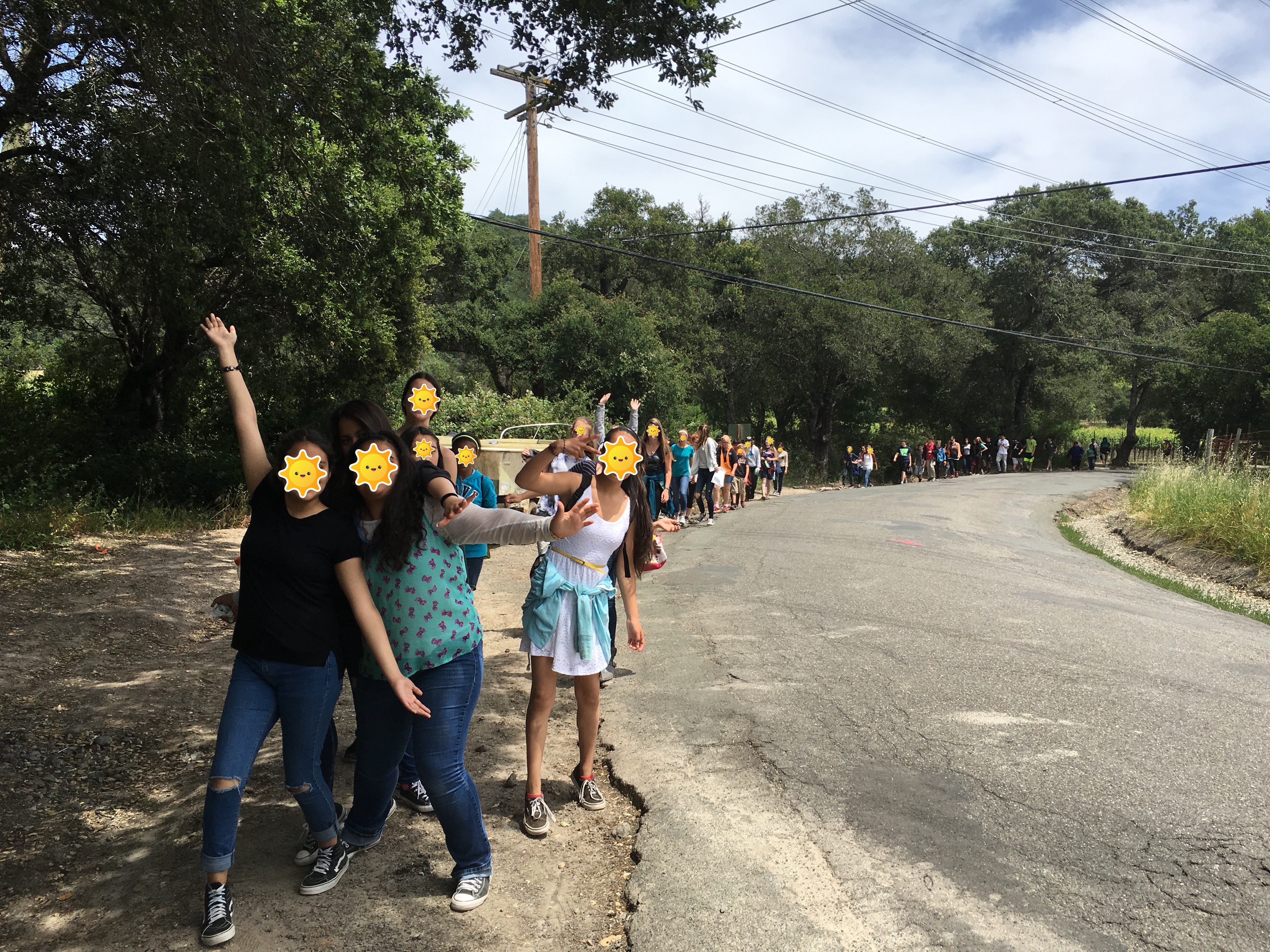
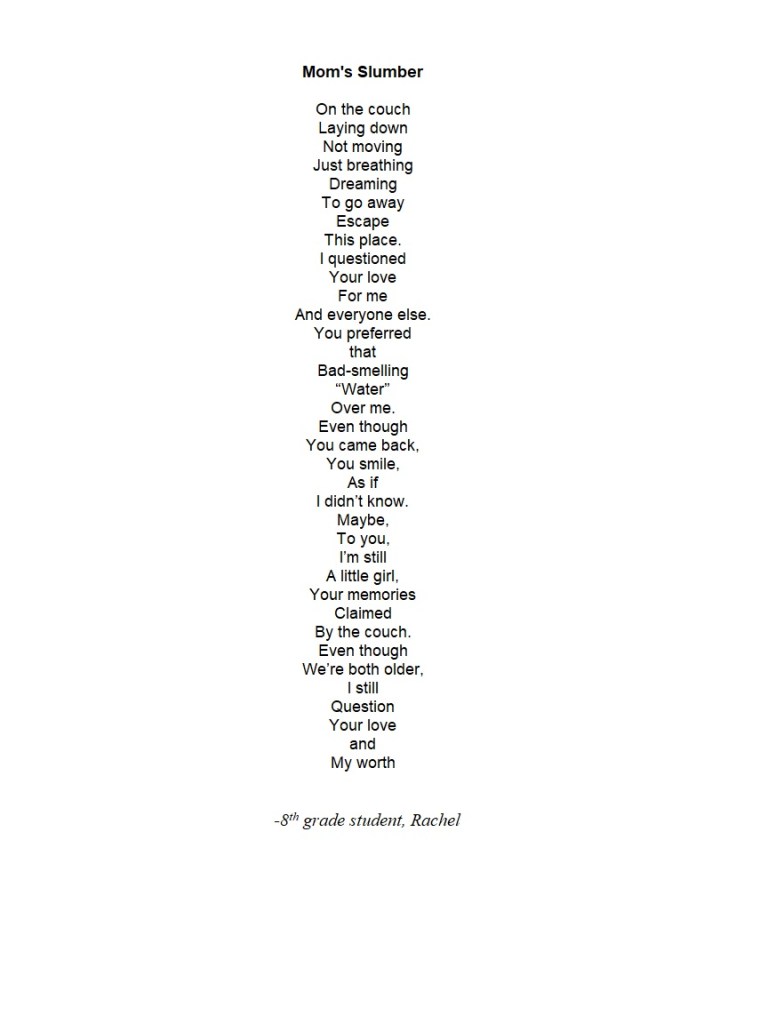
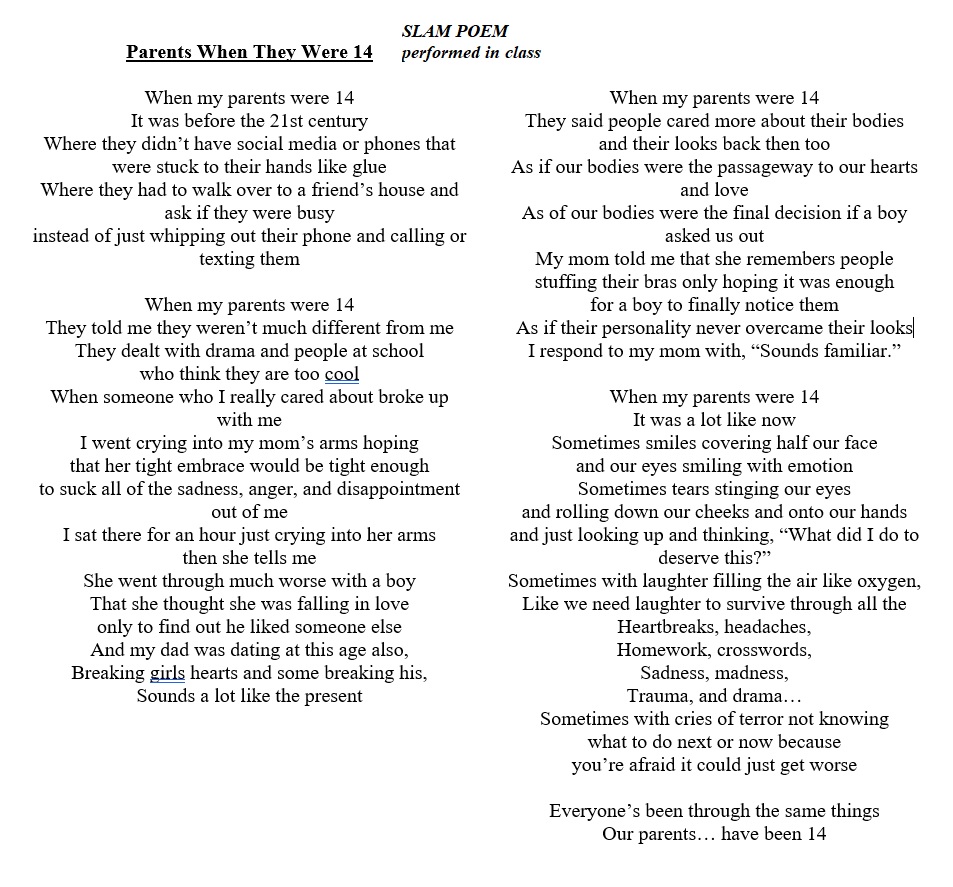
Apply analysis and annotation strategies all over the place. Plan to have students start writing poetry of their own. I recommend Linda Rief’s Quickwrite Handbook and Nancie Atwell’s In the Middle for ideas there. I’ll write more about that later. Depending on the group of students and what I was focusing on that year, I’ve also turned to Slam Poetry next and had students perform for the whole grade level outside at the park next to the school. Super fun. What did they win? Aside from the pride and title? A stuffed animal octopus I may have found at a grocery store gift area because of their amazing skills with ink. I’ll write more on Slam Poetry later, too. I think this page might be long enough already. ??

Curriculum Resources that inspire me:
Books | Websites/Links |
| Nancie Atwell’s In the Middle | http://poetwarriorsproject.com/ |
| Nancie Atwell’s Naming the World: A Year’s Worth of Poems- daily 10 minute poetry circle support including tons of poems | YouthSpeaks SF First Sound Institute Poetry PD – This is a must do to add to your PD bucket list. And a must see is YouthSpeaks Slam Poetry Grand Slam Competition every year in April. Must see! |
| Nancie Atwell’s Lessons that Change Writers | TeachersPayTeachers: I’m Lovin Lit Interactive Notebooks |
| Penny Kittle: Write Beside Them | TeachingChannel.org Meter lesson with 2 poems and drums |
| Linda Rief’s Quickwrites | Annotation Support Free TeachersPayTeachers resource |
| Kwame Alexander’s Page to Stage book/curriculum | Button Poetry on Twitter and Youtube |
 Teacheree